
Do we have a stale inventory problem?
A short summary for news lists and social previews.
The number of homes for sale across the Heartland MLS area has been increasing. But does that mean buyers truly have more options, or is some of that growth coming from aging inventory—homes that are on the market but simply aren’t selling?
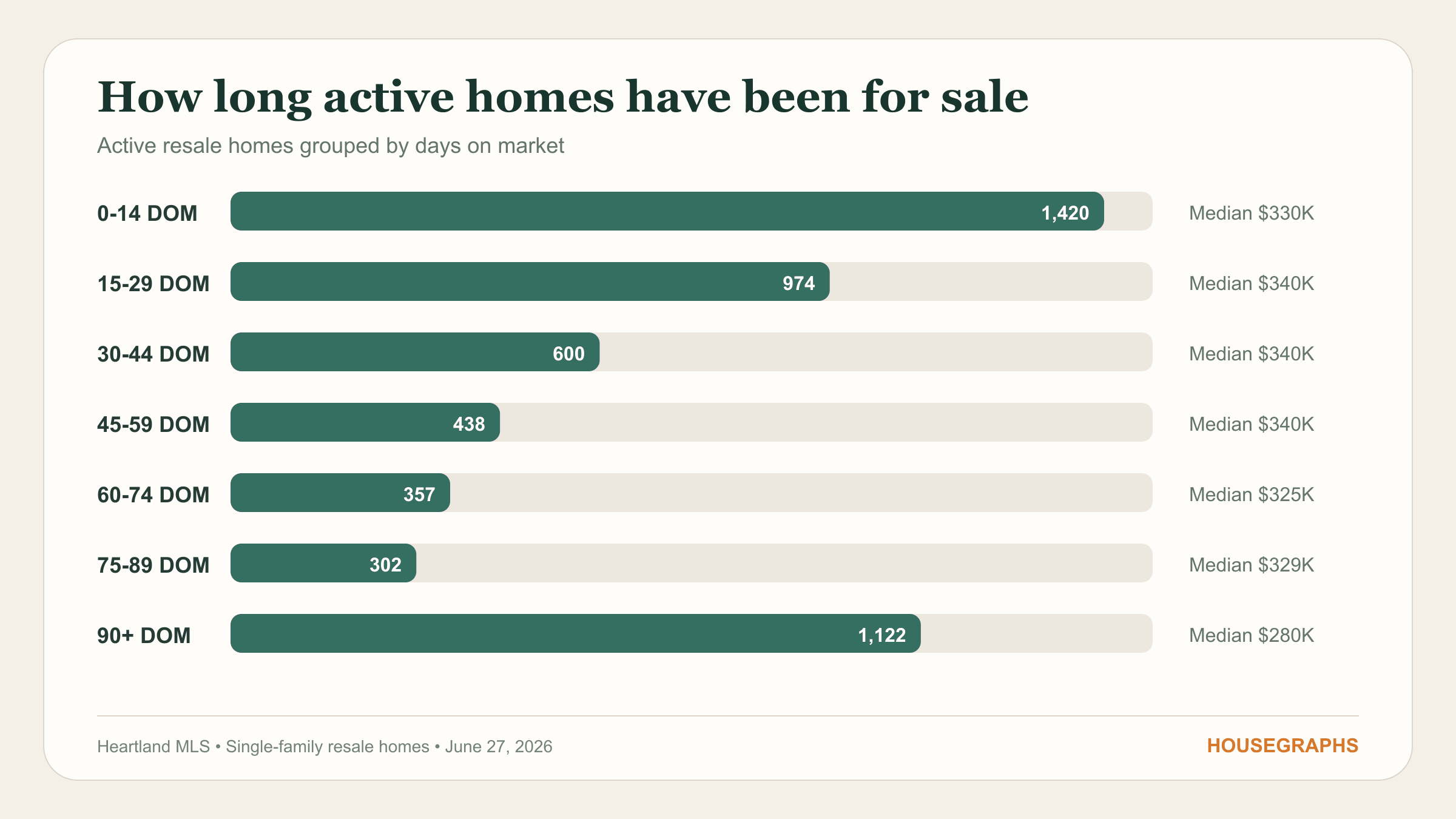
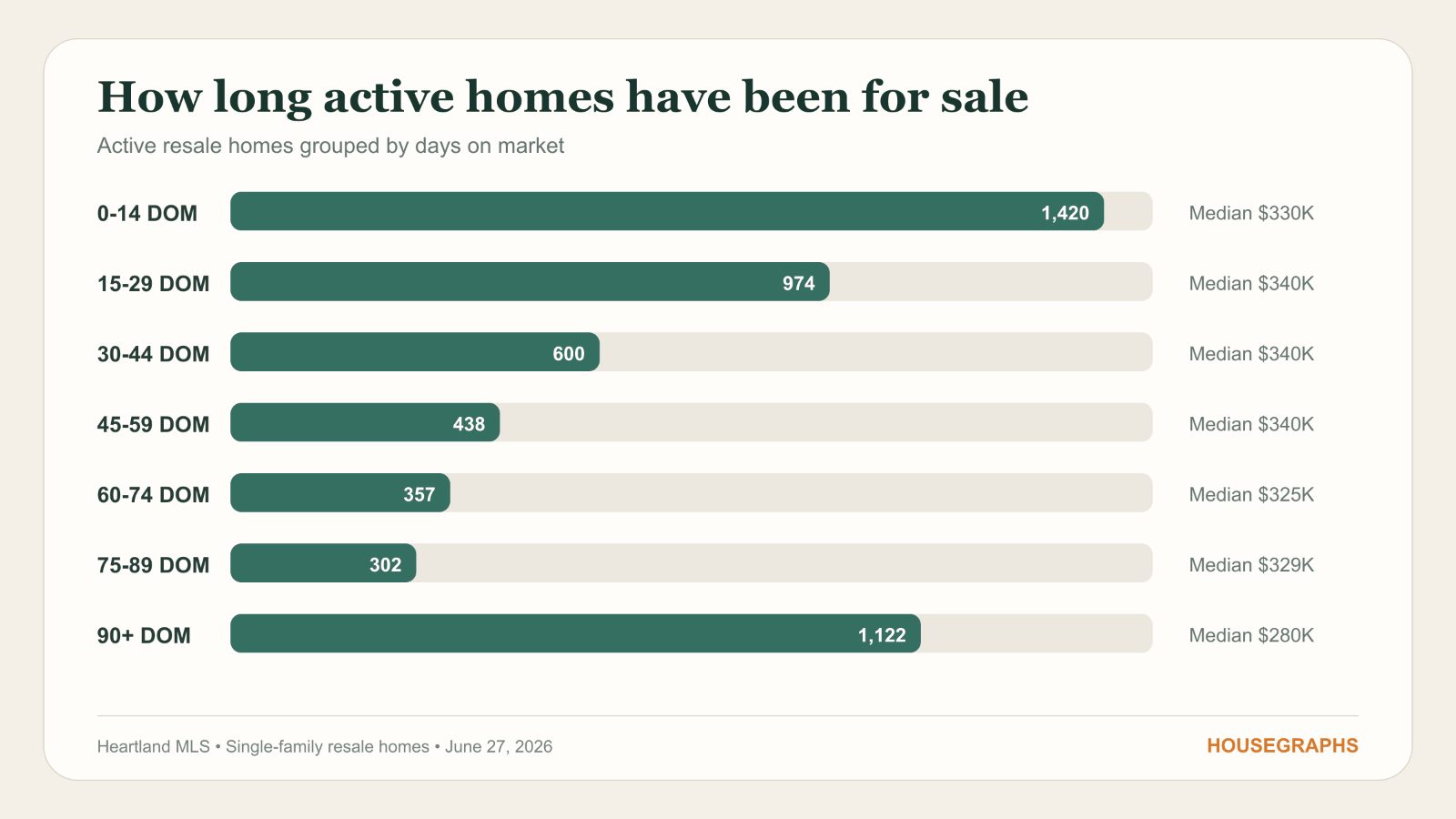
I looked at active inventory as of June 27 and grouped the listings into several days-on-market buckets. Homes that have been on the market for 0–14 days account for 27% of the total active inventory. At the other end, nearly 22% of active properties have been on the market for more than 90 days.
That means almost half of our active inventory is either brand new or has been sitting on the market for at least three months.
One interesting thing about the 90+ days group is its median price of $280,000, compared with a range of $325,000 to $340,000 in every other bucket. There could be several reasons for this. Some of these homes may not be in the best condition, leaving retail buyers unwilling to take on the work. At the same time, they may still be priced too high for investors to make the numbers work.
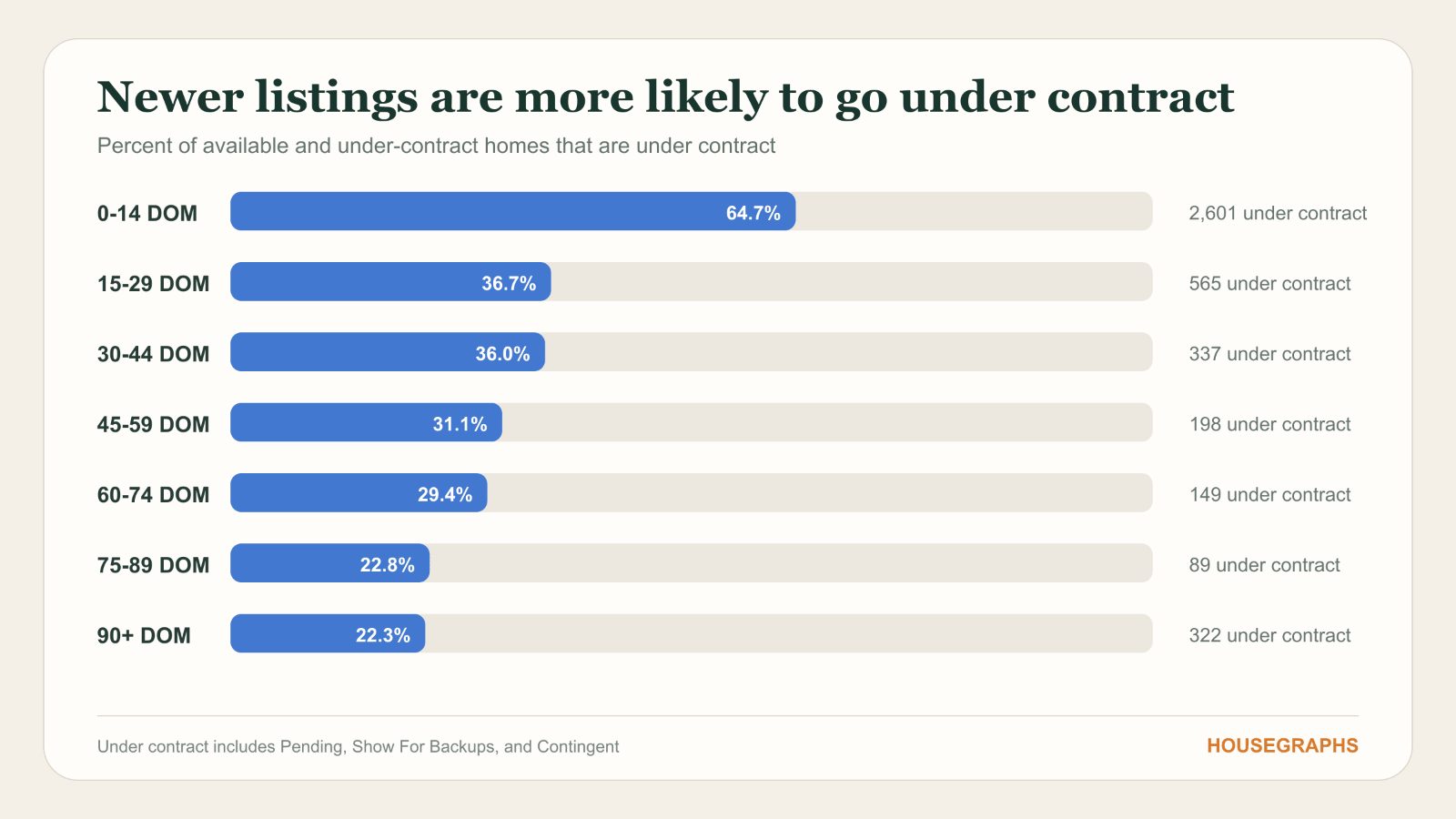
To dig deeper into this aging inventory, I compared the number of homes currently available with the number under contract. Together, these properties provide a picture of homes that have recently been available to buyers.
For example, the 0–14 day bucket contains 1,420 active homes and 2,601 homes under contract, creating a recent market of 4,021 homes. Dividing the 2,601 under-contract homes by that total shows that 64.7% are under contract.
These percentages give us an idea of buyer demand within each days-on-market bucket. Demand is much stronger in the 0–14 day group than in the 90+ day group.
For sellers, this illustrates the importance of pricing a home correctly when it first enters the market. For buyers, a home with more days on market may come with less competition and more negotiating room.
Three major factors affect whether a home sells: price, condition, and location. Sellers control only two of them. You can’t move a house away from a major street or railroad tracks.
Sellers can, however, improve a home’s condition based on feedback from showings. Maybe the carpet and flooring look dated, or buyers have raised concerns about the foundation. The seller could install new flooring or hire an engineer to evaluate the basement and make any necessary repairs. Those improvements may allow the seller to maintain the current asking price.
The other option is to lower the price.
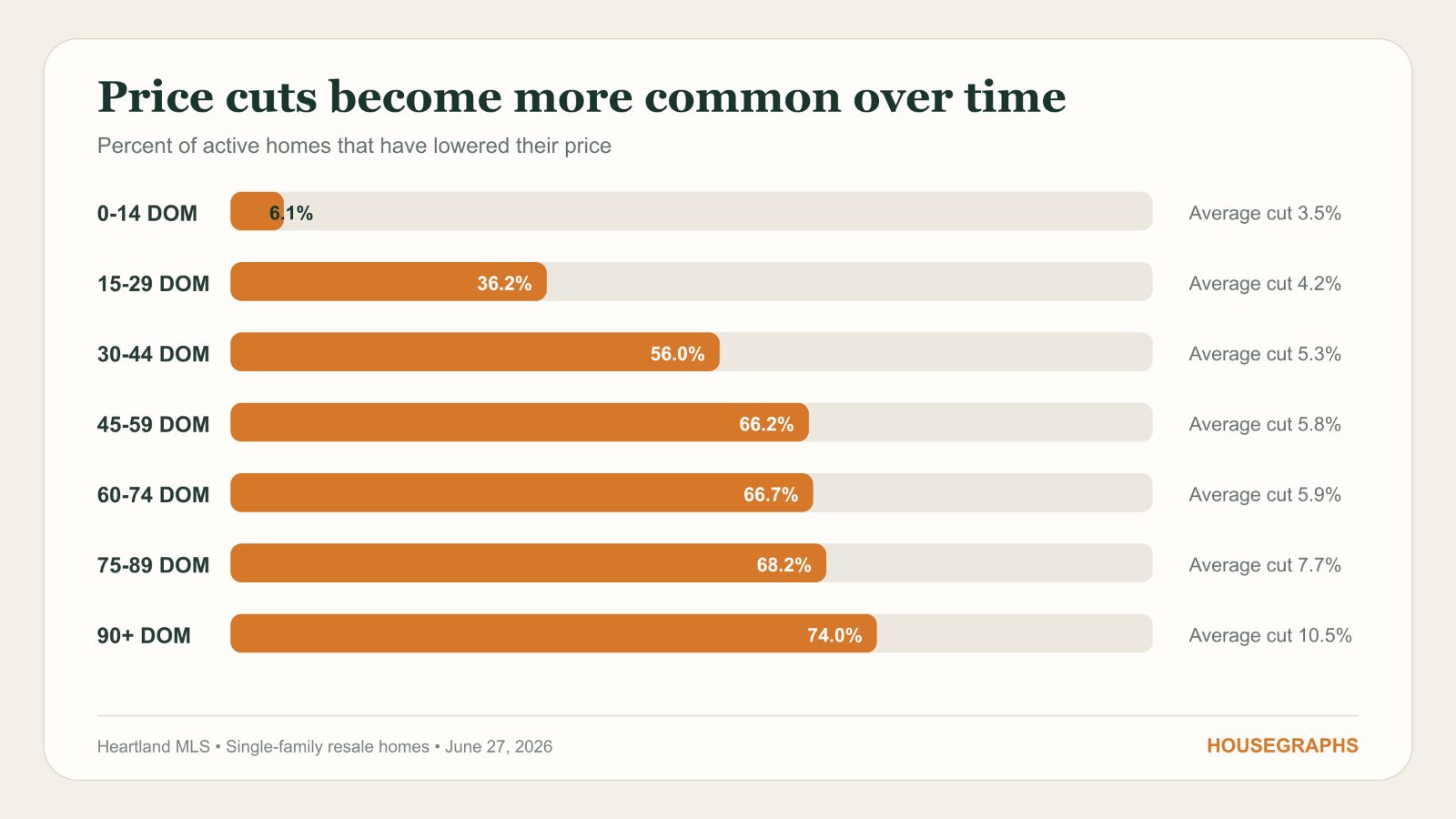
Looking at the days-on-market buckets, it isn’t surprising that the percentage of homes with a price reduction generally rises as listings age. Only 6.1% of new listings have had a price cut. That share increases to about 66% among homes on the market for 45–89 days before rising again in the 90+ day group.
Homes in the 0–14 day bucket have an average price reduction of 3.5%. On a $330,000 home, that equals $11,550. The average reduction increases as listings age, eventually reaching 10.5%. On that same $330,000 home, a 10.5% reduction would equal $34,650.
This pattern may also help explain the lower median price in the 90+ day bucket, although the homes in that group may have started at lower prices as well.
Do we have an aging-inventory problem? The data suggests more homes could be headed toward the 90+ day bucket. Only 22.8% of the recent market in the 75–89 day group is under contract, indicating substantially weaker demand than we see for newer listings.
There are currently 302 active properties in that group. Some will go under contract, while others may be withdrawn or expire, but many could soon move into the 90+ day category if they remain unsold.
What does this mean for our market? It is important to get the price right from the beginning. Once a home has been on the market for more than 14 days, it may be time to consider how to make it more attractive to buyers—either by improving its condition or lowering its price.
One thing to think about: a $1,000 reduction probably won’t separate your home from the competition when homes that have been listed for three to four weeks are reducing their prices by an average of 4.2%.
Based on information from the Kansas City Regional Association of REALTORS®/Heartland MLS for the period January 1, 1997, through June 27, 2026. Kyle Niemann Engel & Völkers Kansas City 913-900-0001